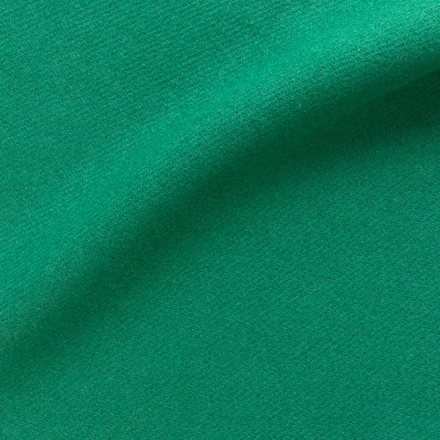
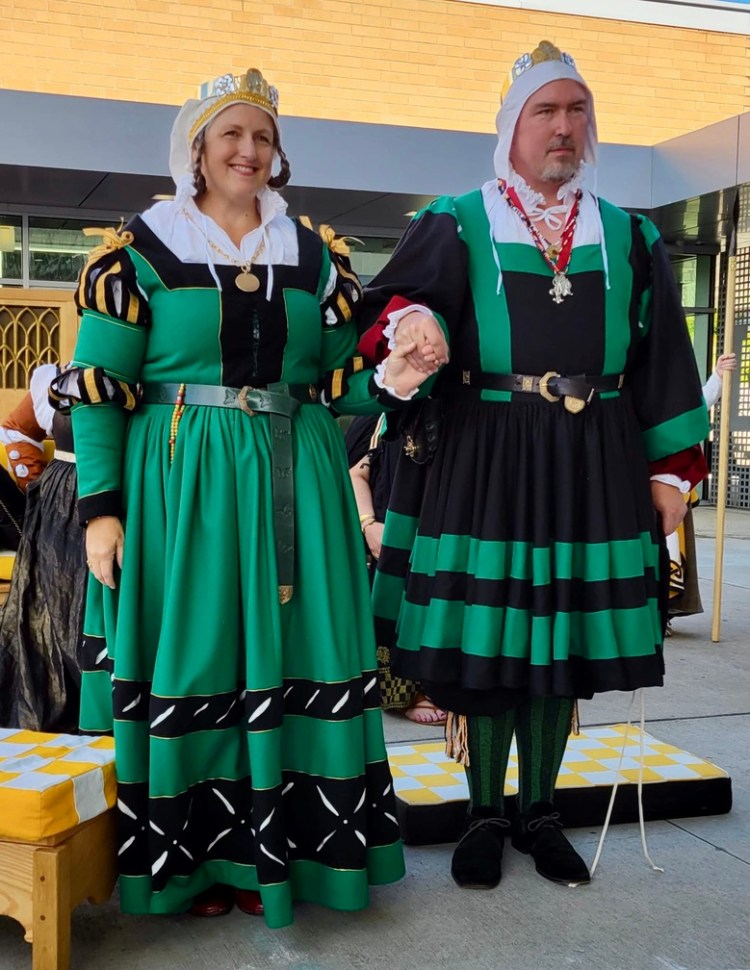
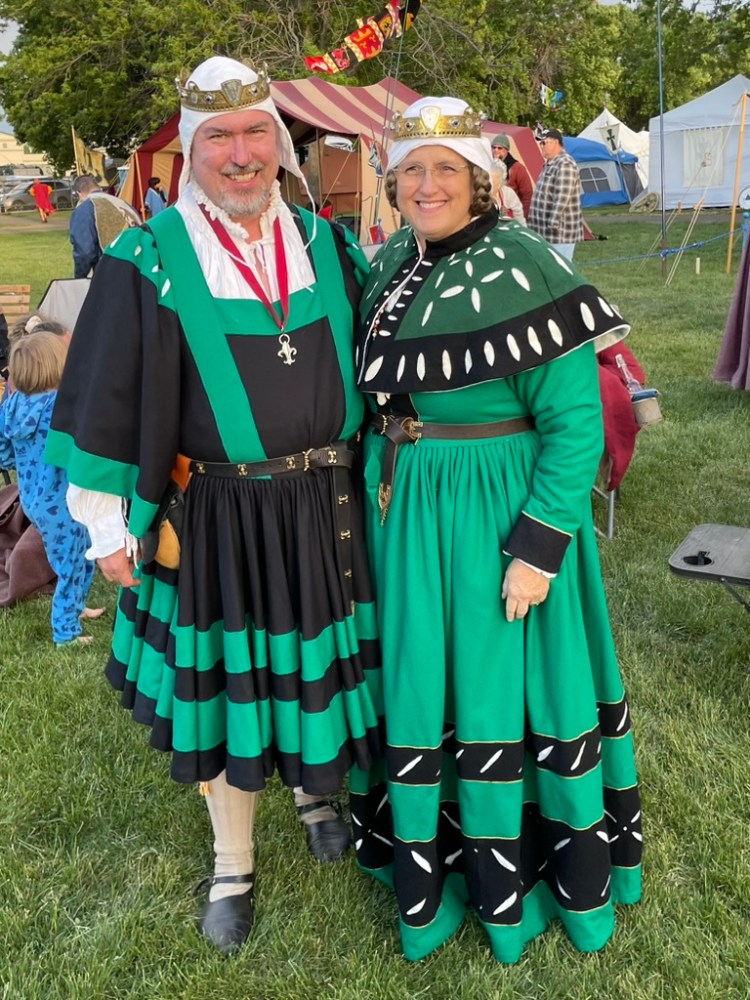
For our baronial investiture, I decided I wanted us to wear German landsknecht, in somewhat of a mirror image format. This particular set of garb was inspired by a lovely piece of green wool (Dorr Mills Holiday Green). Click here for details on my coordinating kampfrau gown.
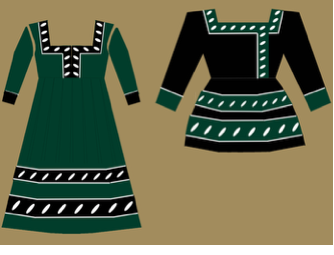
Landsknecht clothing was all about color and impact; they were the fashion extremes of their time. They wore brightly colored clothing, huge hats adorned profusely with ostrich feathers, puffed and slashed doublets that exaggerated their shoulders, hosen with exaggerated calves, and meticulously maintained long mustaches and beards. Famously, Emperor Maximilian responded to a complaint from one of his nobles that the Landsknecht dressed in an “indecent” way, by stating, “Leave them be. With the miserable and wretched life they lead, let us not deprive them of a little entertainment.”
Research and Inspiration
I’ve always wanted to make a Landsknecht waffenrock for Kit, as I thought it would be very flattering. (It was!) I took to my trusty Landsknecht Woodcuts book, by Marion McNealy and August Brenner, and pored through the images to determine my approach.
Waffenrocks seemed to have several common features – square neckline, common guard pattern outlining the square neck and extending to the waistline, one or two guards on the knee-length gored, pleated skirt, and voluminous sleeves gathered to a large, loose ¾ length. Some waffenrocks had damask or brocade guards, and others had solid color guards. Most guards appeared to not be slashed, although couple were slashed and had a length of silk fabric woven through the slashing.
The fabric was generally thought to be wool, although velvet is possible but heavy. Guards made from damask or brocade might be a finer fabric.
Landsknechts wore the waffenrock over an underlayer, the wams, which is a short, snug-fitting doublet with ornate sleeves, and under that, a hemd with a high pleated neck. Those wearing the waffenrock generally also wore a tellerbarret (large hat) with ostrich plumes, a belt slung over their hips, hosen with slashed panes at the knee, and cow-mouth shoes. The pants/hosen situation was generally not visible from the knee up.
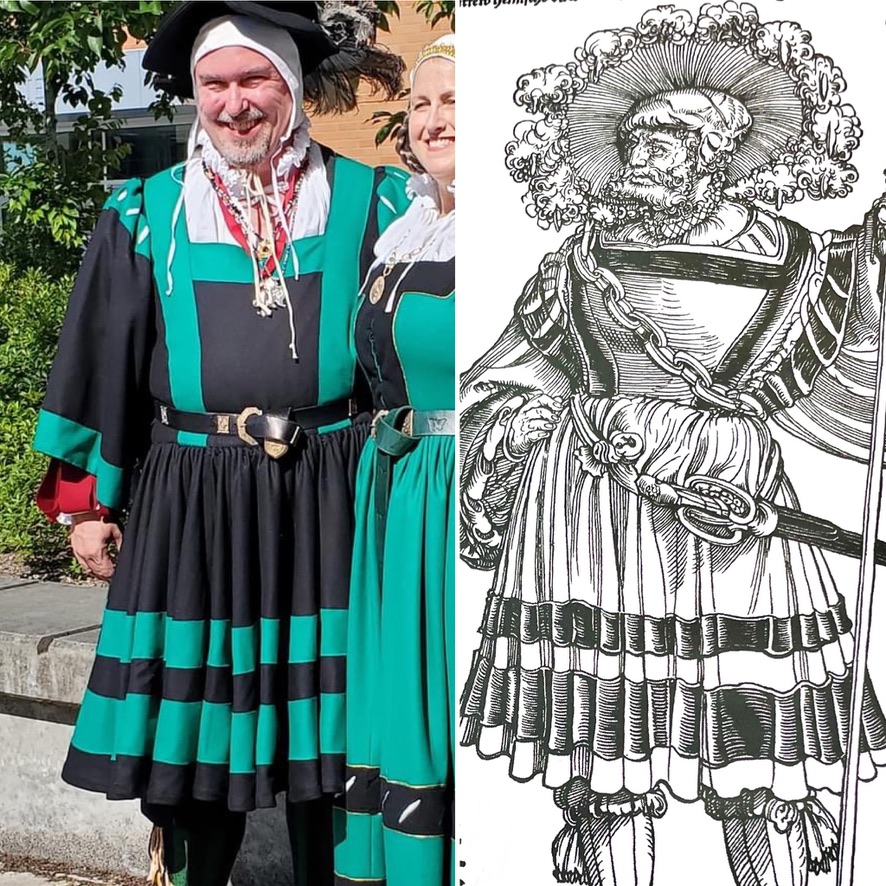
I settled on this image of a dashing Profoss (provost) for my inspiration.
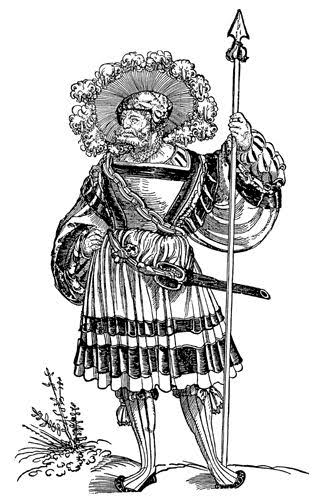
Profoss in the 16th century. Woodcut by Hans Guldenmundt
Rabbit Hole!
The Landsknecht were feared soldiers, but also had a bit of a reputation as looters and marauders, gamblers and thieves. To help manage the broad range of troops, the commander-general (the Obrist) appointed several subordinate officers to keep order and administer the operations of the group.
The Profoss (i.e. Sergeant at Arms) was one such; he was feared and respected as law enforcement and prosecutor, because order and discipline were always endangered by poor conduct. The Profoss also organized and headed the camp fire department. He supervised the market and the vendors, including setting pricing and making inspections, and resolved disputes fairly. He also levied fees, such as transaction fees or storefront fees, to help fund camp operations. Interestingly, the Profoss was entitled to special personal protection against acts of revenge.
The Profoss oversaw the the Trossmaster, who led the extensive tross of vendors, small craftsmen, chefs, bakers, butchers, sutlers, carters, and camp followers, as well as the children and women of the Landsknecht. In addition, he managed logistics of the carriages, train animals and slaughter cattle. All of these were intended to make the troop self-sufficient, and had to be secured against attack or marauding.
Design
I made some design choices and compromises for the overall outfit.
- First, since it was designed to be worn in summer, I wasn’t going to make a separate wams – that layer of wool is too much for modern climate. I faked it by basting fancy sleeves to the shoulder of the waffenrock.
- I chose to make lightweight wool venetians, worn with knit wool striped stockings, vs sewing paned hosen or pluderhosen.
- I also chose existing latchet shoes from the same time period vs one-time-wear cow mouth shoes.
- And, I did not make a tellerbarret at that time, because we were being invested with coronets at the event. Yes, it is possible to wear a coronet tied to a tellerbarret, but I feel that the huge hat is a bit disrespectful and diminishing of the regalia.
Constructing the Clothing
I had never made a waffenrock before, so while I usually hand-draft my own patterns, I started with the Reconstructing History pattern to get a general sense of pattern piece shapes and proportions.
The biggest challenge was going to be the skirt. It seemed to me from illustrations that the skirts were gored, not rectangular, because the drape is clearly conical. They were also deeply pleated, in what looks like cartridge or rolled pleats.
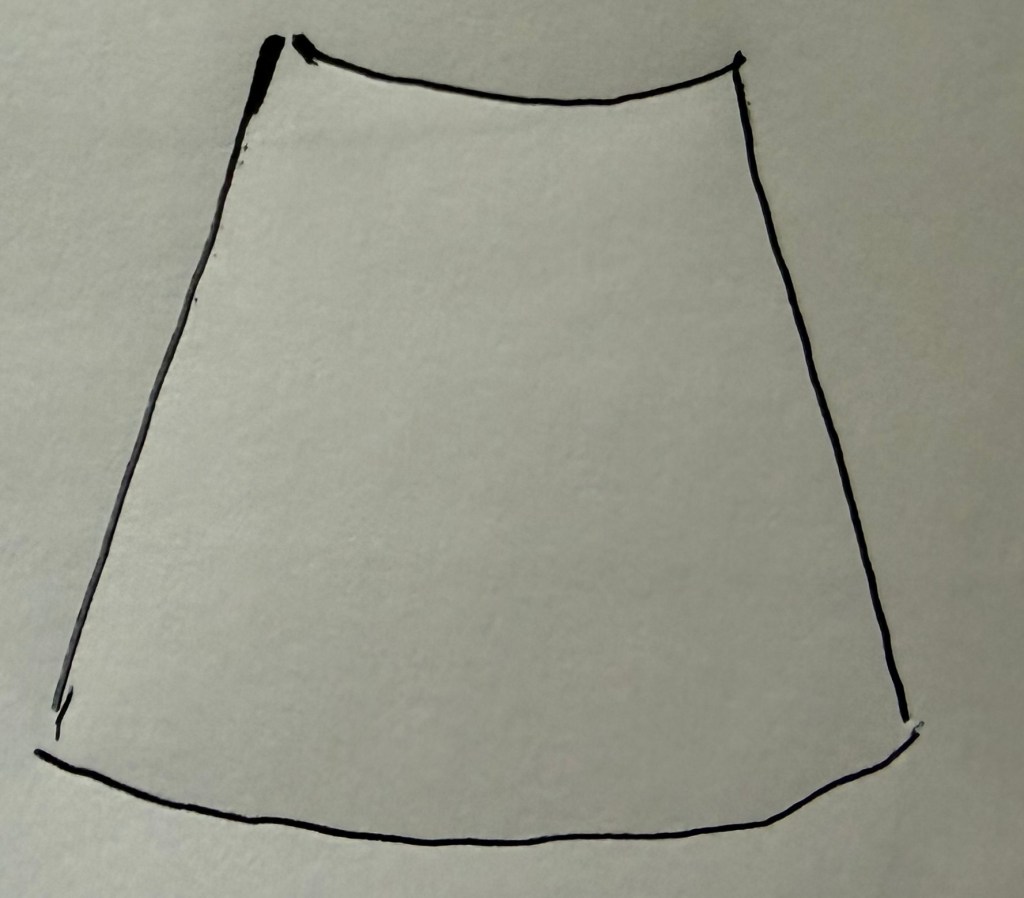
I used the pie shaped gore proportions in the pattern – the pattern suggested using from 8-11 gores for desired fullness, and I used 14. I needed a total waist length that could be loosely cartridge pleated to a prosperous waistline. In using that many gores, because of the pie shape, I created a monster skirt, with a 600” hemline and weighing in at about 12 lbs/6 kg.
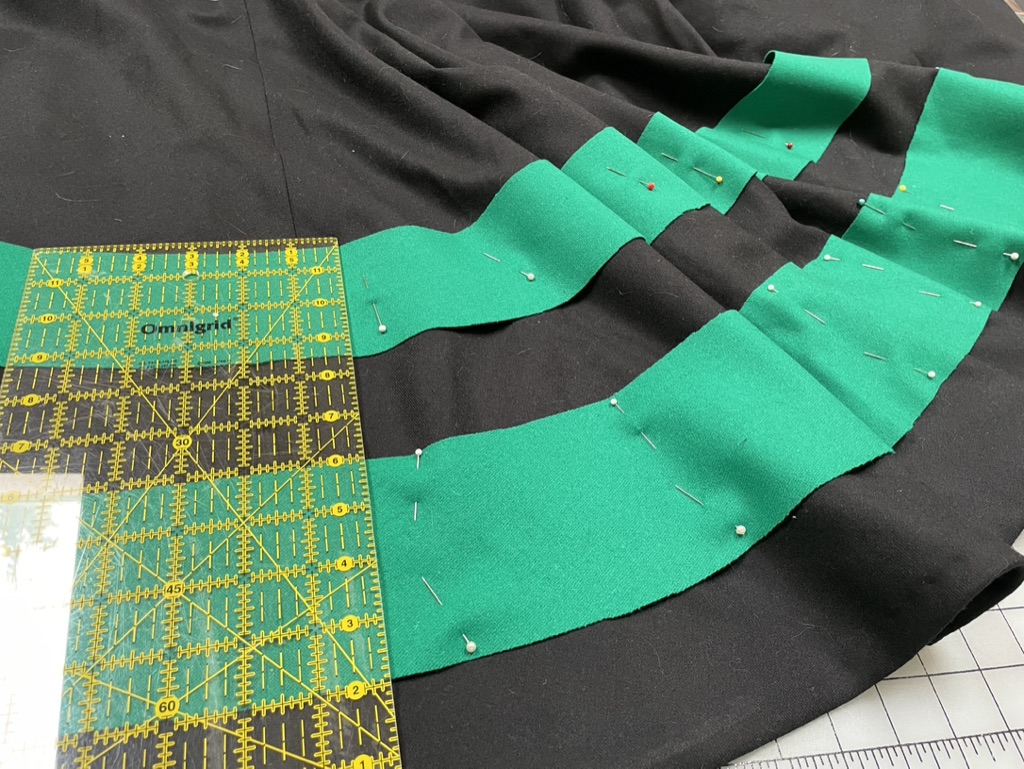
Per my source image, I also wanted to apply two guards to the skirt, and with a gored construction and curved hem, the guards needed to be cut on a matching curve (or steamed and stretched on an iron into a curve – which wasn’t my preference for a good drape). Cutting curved guards is a bit tedious and somewhat extravagant with the gore fabric.
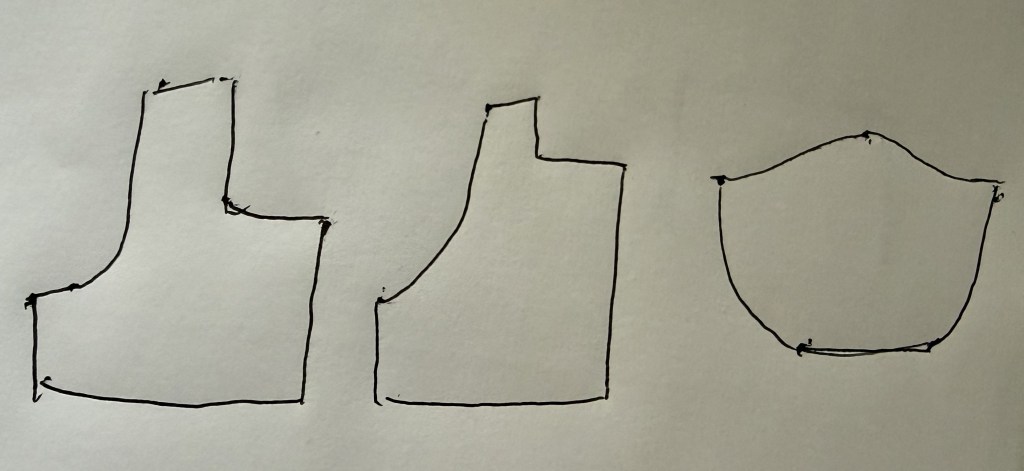
The bodice and sleeves were very straightforward, other than a very deep armscye. I cut three layers of the bodice – outer wool, canvas interlining, and linen lining. The sleeves had two layers, with no canvas interlining. The skirt had just a single layer, the wool, plus the guards.
I basted the interlining to the linen lining, trimming seam allowances. I bag lined it and finished the bottom edge, leaving the armscye a raw edge. I chose to add side lacing for one side for accessibility, with finished edges and eyelets, but as it turned out the garment was loose enough to not require lacing. I marked the guards and handed the bodice off to a friend to apply the guards.
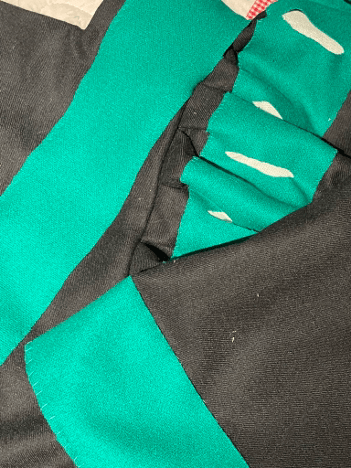
I then lined the sleeves and applied the guards to the outside. In this particular woodcut, most of the guards were not slashed, but the stripe nearest the shoulder had slashing. I basted down a strip of white linen, pre-slashed the green guards, and then whip-stitched them over the white. I loosely pleated the sleeve bottoms into a very loose wrist band, and pinned, pleated, and stitched the sleeve head to the bodice armscye.
I sewed all the skirt gores together and pressed the edges flat, and likewise sewed all of the guard sections together. A clear quilter’s grid ruler is your best friend for this! I marked, laid out, pinned and stitched the guards to the skirt via long zigzag machine stitch.
I hemmed the skirt, bottom and top edge. I marked and stitched double gathering thread through the top edge, and cartridge pleated the skirt to the bodice.
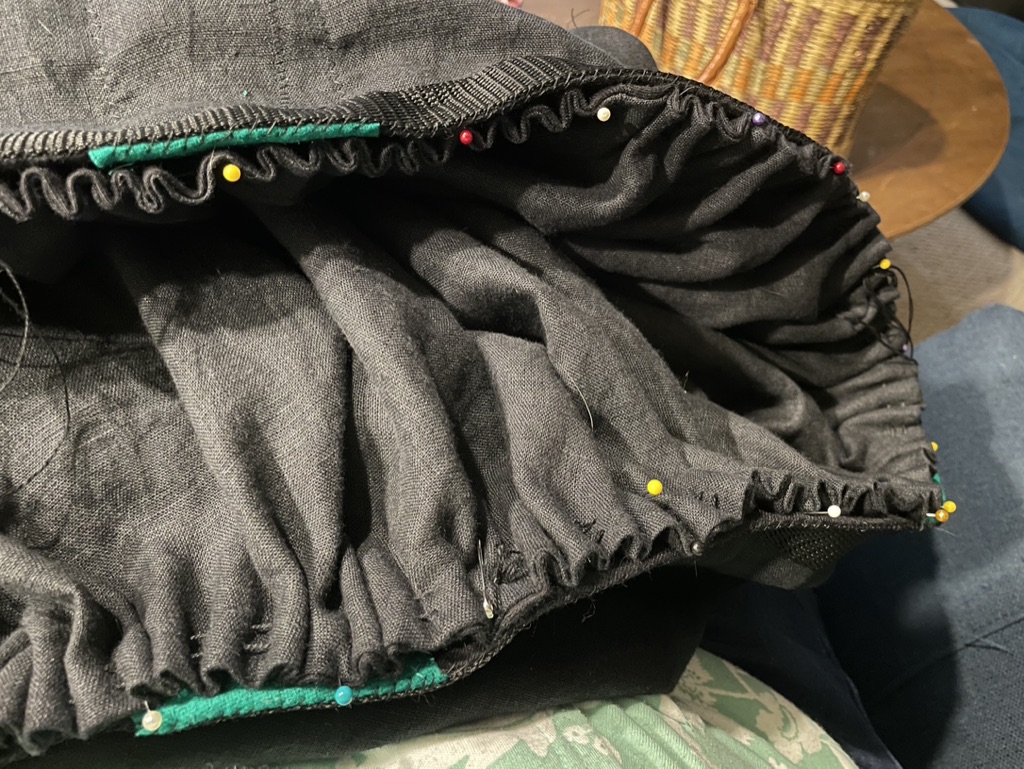
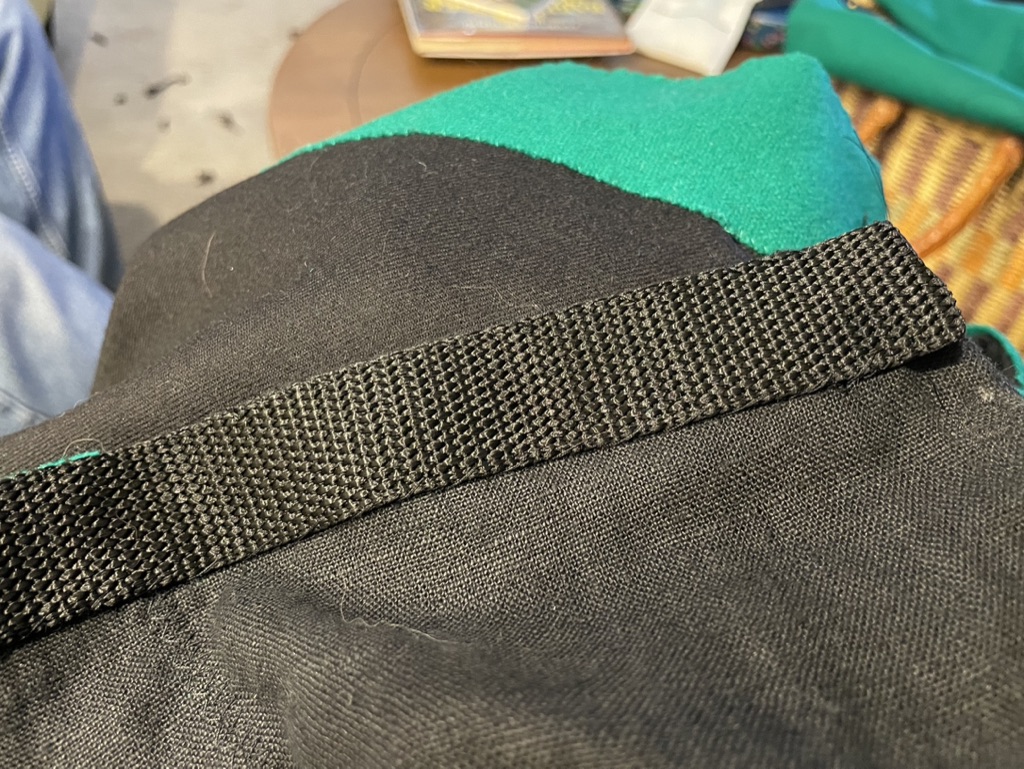
In this particular instance, I was worried about the weight of the skirt on the bottom of the bodice. I generally sew a stabilizing band at the bottom of the bodice, and add a hook and eye closure where the waistband closes. I used heavy webbing for the stabilizing band, which turned out to be awfully difficult to hand-sew through for securing the cartridge pleating.
I needed to make my faux wams, so I chose contrasting colors and put together a base sleeve and sewed floppy contrasting panes to it. I stitched that into the shoulder seam of the waffenrock. He wore those sleeves once, they really didn’t show all that much, and thereafter just wore the waffenrock over his hemd.
Final Garment
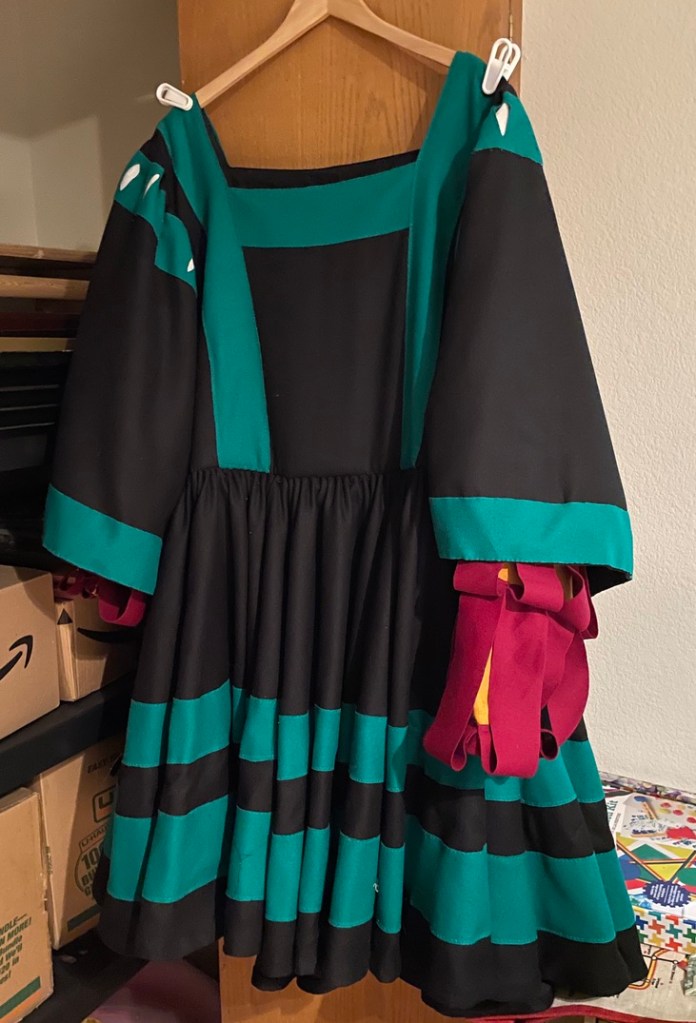
I was very happy with the overall look of the garment. It fit him well and draped exactly like I’d hoped. The waistband was a little too low for the period look, and the skirt was definitely too heavy for comfort. And, in the end, the wams were a bit unnecessary.
Next Steps
The only pending next step is to make a matching black tellerbarret, with white ostrich plumes, which is on my project list for fall. I can’t really make any effective changes that impact the skirt weight, although I could potentially make another waffenrock in the future of lighter weight fabric with a less voluminous skirt. It is a good fencing coat, after all!
Resources
https://www.artic.edu/artworks/99021/emperor-maximilian-i
https://www.historiascripta.org/renaissance/landsknechte-in-service-to-an-empire/
https://de.wikipedia.org/wiki/Landsknecht
Waffenrock Sewing Pattern, https://reconstructinghistory.com/products/rh503-waffenrok
Landsknecht Woodcuts: Kriegsvolker im Zeitalter der Landsknechte, by August Breunner and Marion McNealy | May 18, 2016
Town and Country 1517 – 1550: Scenes of Everyday Life in Detail from Geisberg’s German Single Sheet Woodcuts (Selections from Geisberg’s German woodcuts), by Marion McNealy and Max Geisberg | Oct 26, 2021

