The smock or shift worn under renaissance German clothing, whether Landsknecht or court, male or female, was called the hemd. There were three types of hemde worn with German garments, with slightly differing construction: high neck, round neck, and square neck.
German women, in particular, rarely wore plain hemde. Instead, they preferred pretty underwear, linen or fine wool embellished with pleating, smocking, embroidery, and pattern darning. I, too, like pretty underwear! I am not much of an embellisher, though, so will point you at external resources for more information on that.
Dame Anne von Wiese’s Tutorials on Smocking, Shirring, and Pattern Darning
Meisterinne Genoveva’s Blog Tutorials on Pleatwork and Smocking
I will address construction and process photos in separate posts, and will link from here when they are available.
High-necked Hemd
This garment consisted of many yards of fabric gathered, finely pleated, and smocked into a wide band at the collar and cuffs. From portraiture, I estimate the collar to be 2.5-3” tall, often with a small frilled edge extending the height.
The high-necked hemd is very practical, preserving modesty, providing sun protection, and keeping the wearer warm and protecting the outer garments from sweat and body oils.
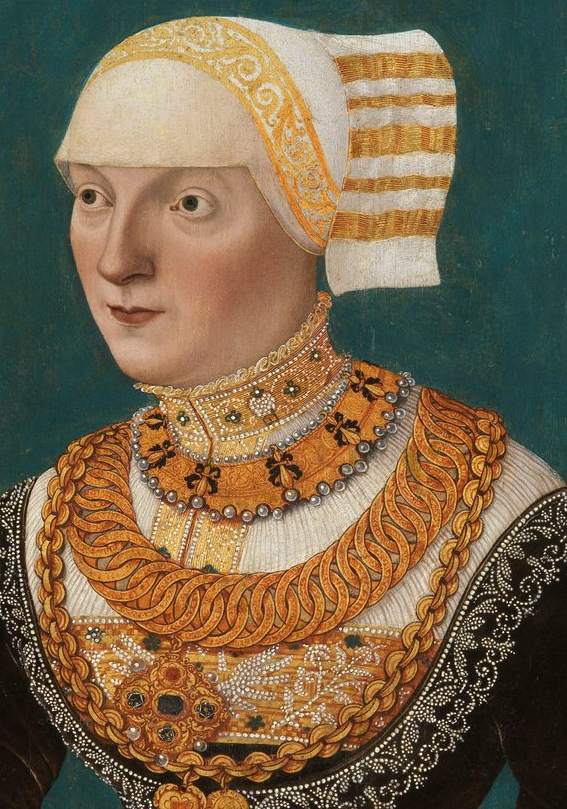
Detail from Portrait of a Woman, Conrad Faber, 1515
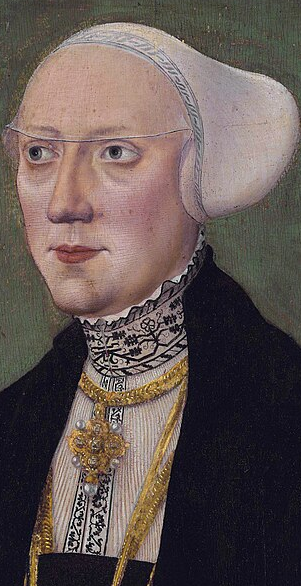
Detail from Maria Jacobäa, Hans Schopfer, 1515
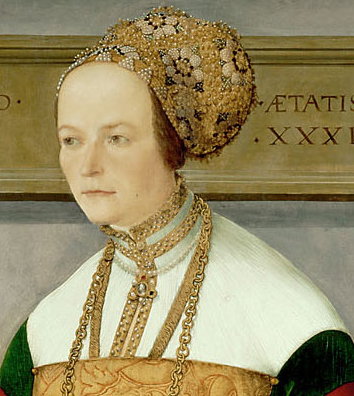
Christoph Amberger, Portrait of a Lady, 1525
Round-necked Hemd
The round-necked hemd was constructed similarly to other voluminous, gathered shifts of the same time frame, worn in other areas of northern Europe, like the Italian camicia and Tudor smock. It also is made of generous amounts of fabric pleated into a band at collar and cuffs, although the neck band is narrower than that created for the high-necked hemd. It’s possible that this style of hemd was worn a little earlier in period than the high-necked hemd, although I’d need a much broader data comparison to draw a real conclusion.
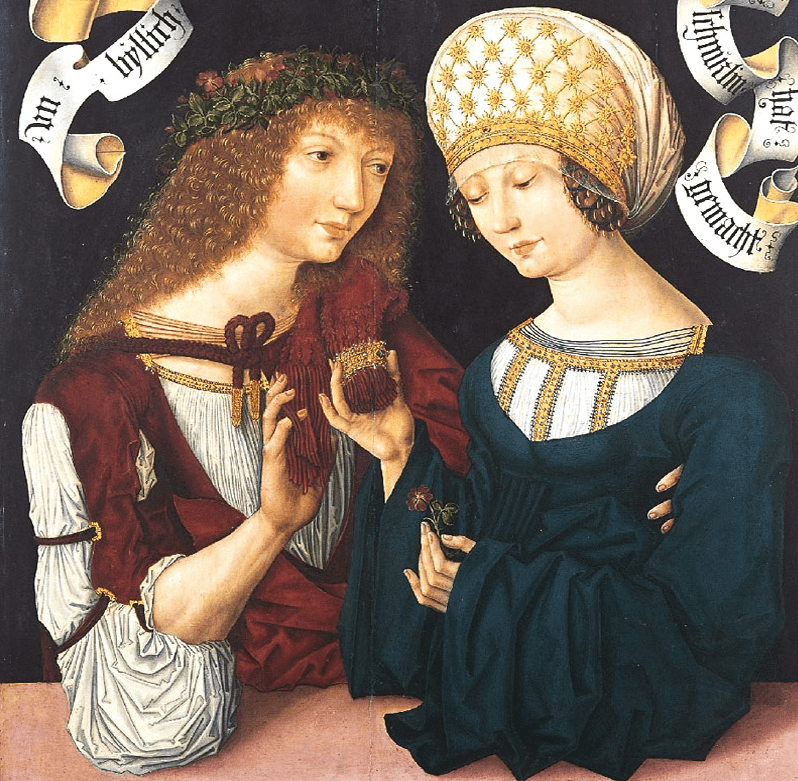
Detail from Lovers from Gotha, Master of the Housebook, 1482 (Note that both man and woman are wearing a round-necked hemd.)
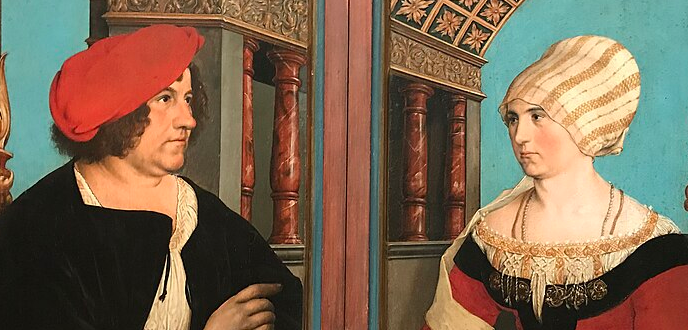
Detail from Diptychon des Bürgermeisters, 1516, Hans Holbein (Note that both man and woman are wearing a round-necked hemd.)

Detail from Portrait of Elspeth Tucher, Albrecht Durer, 1499
Square-Necked Hemd
The square-necked hemd could either lie flat and closer to the body, similar to a Tudor smock, or contain many yards of finely pleated fabric, similar to the round-necked hemd.
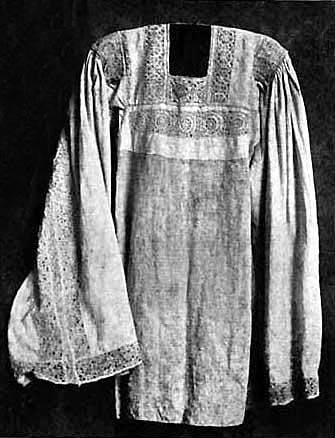
Linen Hemd, Museum Bern, 16th ct

Detail from St Ursula, Hans Holbein the Younger, 1523

Detail from Portrait of Anna Scheit, Barthel Beham, 1528
Note on Sumptuary Laws
Sumptuary Laws affected both general dress and undergarments. These laws accreted over time, and were designed to define social class and marital status, limit foreign indulgences, and reduce extravagance.
At the end of the 15th century, Nűrnberg law placed limitations on:
- Cloth of gold or silver
- Velvet, satin, or other silk material
- Sable, marten, ermine, or weasel fur
- Linings of silk in mantles
- Voluminous garments, headdress fabric, veils, jewely, and paternosters all were limited by law
Specific restrictions from these Nürnberg sumptuary laws that may have affected women’s dress and evolving styles include:
- Dresses that were cut too low in the neck, defined as one fingers’ breadth below the throat (High-necked hemd?)
- Garments and coats should not be standing open at the girdle, but clasped or wholly closed, or worn under a breast-cloth and closed collar. (Saxon dresses?)
Sumptuary laws were difficult to enforced and unevenly applied, and conspicuous consumption may have played a significant role – the flamboyant might have worn what they pleased and paid fines accordingly.
Reference Resources:
Wikimedia Commons, copyright free images with good source citations
https://commons.wikimedia.org/wiki/Main_Page
The Right to Dress: Sumptuary Laws in a Global Perspective c.1200–1800, Ulinka Rublack, 2019

