In order to move to France, we needed a long term visa.
France is a Schengen area country, so Americans are able to enter with no special visa (i.e. a tourist visa) and stay for 90 days per 6-month period. Visits longer than that require a temporary long stay visa application and approval.
There are other countries that have a much longer tourist visa for Americans. Albania, Georgia, and Palau top the list at 1 year, and Canada, U.K, Costa Rica, Panama, and Mexico allow an American a 6 month tourist visa.
There are some countries with visas of varying lengths that allow “visa runs”, the ability to leave the country, get your visa stamped elsewhere, and turn around and come back immediately. This is never guaranteed, though. Visa runs are not allowed from any of the Schengen area countries.
Note: The Schengen Area comprises 29 European countries with open borders and a standard visa policy for international travel and focuses primarily on travel and border controls. On the other hand, the European Union is a political and economic union of 27 European member states that share a single internal market through a standardized system of laws and has more significant political, economic, and social implications.
https://etias.com/articles/eu-schengen
French Long Stay Visas
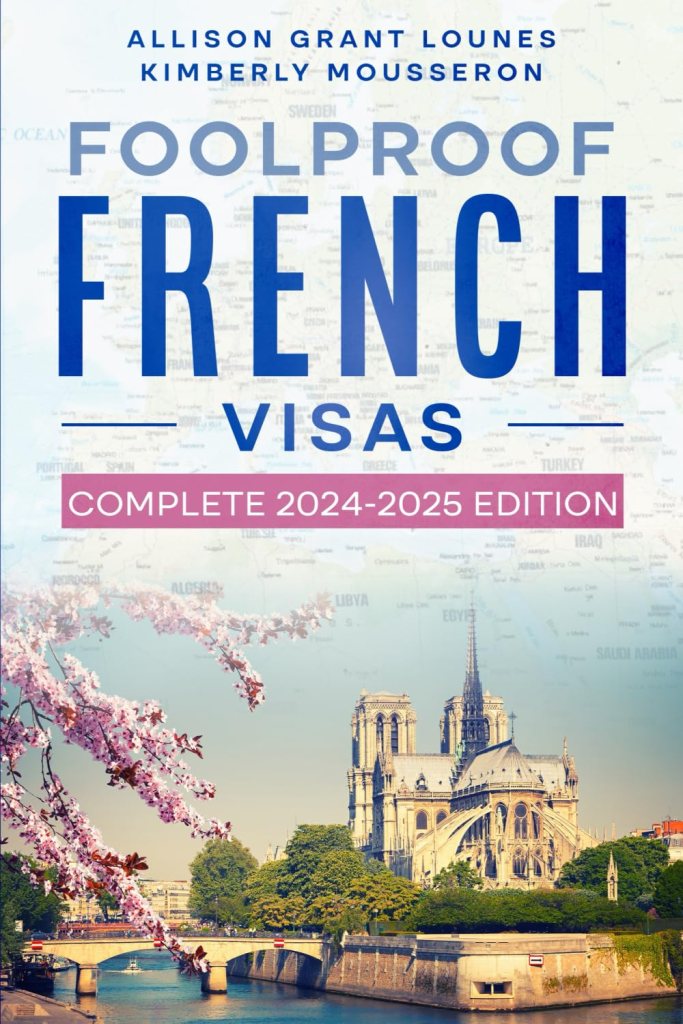
I used a visa consultant, Franceformation, but I probably could have managed on my own. The owner literally wrote the book on French visas, Foolproof French Visas. If you are doing your own research on visa options, make sure you are getting information from reputable sources (like the country’s consulate) because visa guidance can change quickly and often.
For Americans (and other non-EU citizenship applicants) the long stay visa is called either the VLS (Visa Long Sejour) visa, which is good for 3-12 months, or the VLS-TS (Visa Long Sejour – Titre de Sejour) which is good for 12 months and is annually renewable from within France.
The private visit or tourism visa requires that you are not entitled to engage in any professional activity nor able to earn any income. France doesn’t have a specific retirement visa, nor do they have a digital nomad option. This is the visa type we pursued and were granted.
The student visa is available for higher education or training courses, including learning French, with specific guidance and restrictions on teaching hours and duration of course/visa.
The family purpose visa covers multiple scenarios: marriage, family reunification, etc.
The temporary long stay visa for professional purposes is strictly governed and at this time does not encompass a digital nomad option. This linked fact sheet has good information and links to reference materials.
TLS-VS Private Stay Visa
The TLS-VS private stay and tourism visa must be applied for from your country of residence (not from within France). It requires:
- Proof of passive income or savings exceeding the annual French minimum wage (approximately 14,400€ or $17,500 – our consultant recommended we document $20,000 resources each). This must be proved at each renewal as well.
- Proof of private medical insurance covering the full year. Neither American insurance nor travel insurance meet this requirement.
- Proof of address in France. This can be a short term rental but you must be able to receive mail there.
- Attestation that you will not work while in France.
The visa can be applied for within 90 days of anticipated arrival date in France. Applicants apply via a visa application contractor retained by the French Consulate, TLSContact, to perform application intake – they verify completeness, but don’t screen – and forward the packet to the consulate.
Visa application costs include:
| TLSContact Service fee | 220€ |
| Long Stay Visa Fee | 99€ |
| Visa photo | 12€ |
| Express courier fee | 40€ |
| TOTAL COST | 371€ |
Our TLS-VS Visa Experience
We made our appointment on October 20 using the TLSContact website, and got an appointment on November 5. It’s my understanding that some regional TLSContact offices are more difficult to schedule, and that the scheduling lead time is much longer during peak period in summer.
We put together our packet, in the same sequence as the checklist in the application form. It included:
- TLS-VS application checklist and payment receipt
- TLS-VS application
- Cover letter
- Attestation that we would not work
- Proof of finances. Our proof was the last 3 months statements of cash reserves. It’s my understanding that it must be cash and immediately available, not sitting in an investment. 3 months proof of pension, social security, or other passive income meeting the criteria would also work.
- Proof of address. In our case it was a letter from the notaire handling our house, documenting address and closing date. A rental agreement or short term rental receipt with address would also work.
- Medical insurance certificate. This needs to be for 12 months, so will likely need to be prepaid for 12 months.
We also had to provide our current passport, which was retained by TLSContact and sent to the consulate with our application packet.
Our Application Experience
We went down to the downtown Seattle TLSContact office. It was a tiny two room office, with a security guard and metal detector fronting the waiting room, and a processing room with three counter stations divided by cubicle walls and staffed by bilingual agents. Two were processing applications, and the third handled biometrics (fingerprints) and visa photos.
The agent took our application packet and checked for completeness. They reprinted the application pages and had us sign in front of them. We paid for biometrics and photos, and prepaid overnight shipment from TLS to the consulate, and from the consulate back to our home. We received the tracking details with our receipt. The entire appointment took a half hour (15 minutes apiece).
We had one minor issue with our application upon review in DC, handled via email. Our medical insurance provider billed us for the first quarter, and so our insurance certificate was only for 3 months. I missed this detail. We had to request a year’s advance billing and a new copy of the resulting 12-month insurance certificate, and we were able to resubmit that via email.
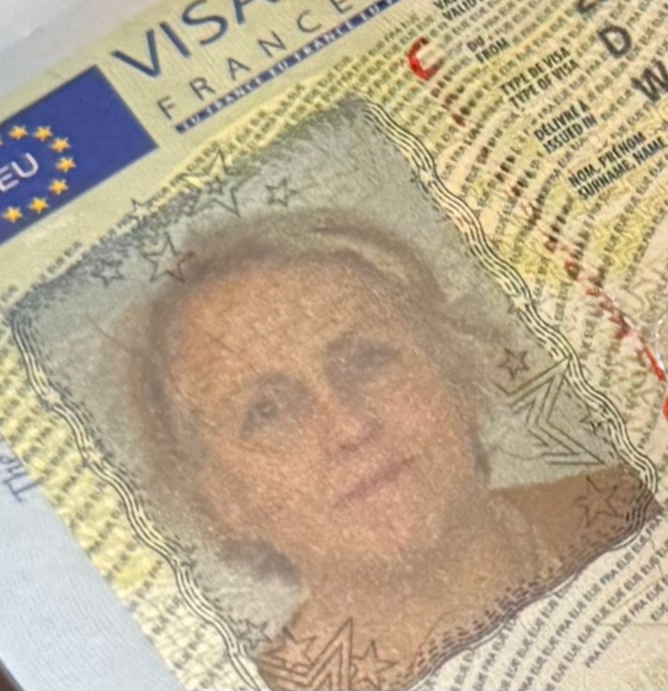
We were notified of each shipment in the process, and exactly 10 business days out, we received our passports back. We had no idea of the outcome until we we opened our passports – it’s my understanding this is the usual experience – and our new French VLS-TS visas were affixed to the center page. We would have gotten things back at 7 business days out if we hadn’t had the insurance certificate glitch. This is very fast by visa review standards – it’s my understanding that other countries are running 2-3 months processing time on visa applications.
Next Steps
Upon arrival in France, we will need to validate our arrival online with the French consulate. The visa approval includes the instructions and link to do so. We will need:
- a valid email address
- information on our visa date of arrival in France
- our home address in France
- a bank card to pay online for the residence permit (Cost: 200€)
This visa validation allows us to leave and re-enter France without a separate residence card.
After validation, the OFII (French Office for Immigration and Integration) should contact us to schedule a medical card intake – this typically includes a very basic physical including a general clinical examination, an x-ray of the lungs, a vaccination check, and a blood glucose test for those at risk of diabetes.
Upon Expiration
Carte de séjour temporaire. At 2-4 months prior to our VLS-TS visa expiration, we will need to start the application process for a temporary residency card/carte de séjour temporaire.
- We will be asked to provide documents proving that our situation has not change
- We will need to sign a “Contrat d’engagement à respecter les principes de la République”, which states that we promise to uphold the values of the French Republic.
- Cost: 225€
Carte de séjour pluriannuelle. Following that, we can apply for a multi-year residency card/carte de séjour pluriannuelle which is good for 4 years.
- We will be asked to provide documents proving that our situation has not changed
- We may be asked for additional documents to prove your ‘integration into French society’.
- We may need to prove our French language skills – the language level required for a multi-year residency card is an A2.
- Cost: 225€
Carte de résident permanent. Finally, we can apply for a permanent residency card/carte de résident permanent which is renewable every 10 years.
- We will be asked to provide documents proving that our situation has not changed.
- We will need to attend an appointment at our local prefecture.
- We may be asked for additional documents to prove our ‘integration into French society’.
- We will need to prove our French language skills – the language level required for a 10-year residency card is a B1.
- Cost: 225€
Final Thoughts
Remember, visa guidance changes often and quickly. The above is my personal experience with my particular visa, as of November 2025. Please do not rely on it as visa requirement and process facts! Instead, go here for the details you need: https://france-visas.gouv.fr/en-US/web/france-visas
 House Snark